
Introduction
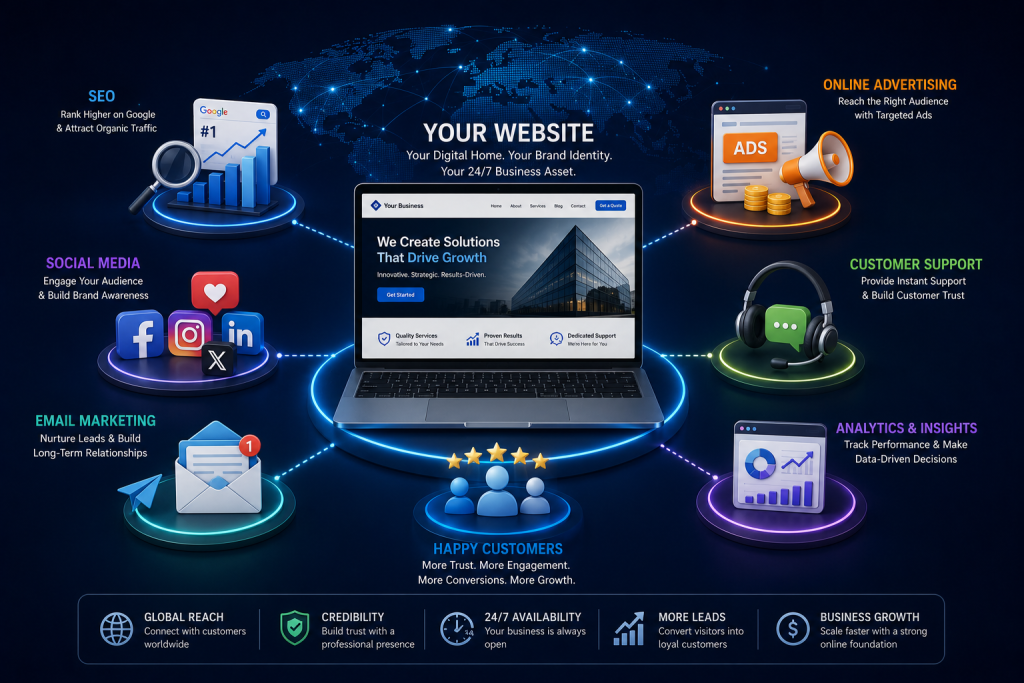
In today’s digital world, having a business without a website is like opening a shop without putting up a signboard. No matter how great your products or services are, potential customers need a way to find you, learn about your business, and trust your brand.
Many small business owners still believe that having a Facebook or Instagram page is enough. While social media is an excellent marketing tool, it cannot replace a professional website. Social media platforms are rented spaces—you don’t own them, and their algorithms can change at any time. A website, on the other hand, is your own digital property where you have complete control over your brand, content, and customer experience.
Whether you run a local business, an online store, a startup, or a service-based company, a website works for you 24 hours a day, seven days a week. It helps customers discover your business, understand your offerings, contact you, and even make purchases without visiting your physical location.
A professionally designed website also creates credibility. Modern customers often search online before making a purchase, reading reviews, or contacting a business. If they can’t find your website, they may choose a competitor instead.
In this guide, you’ll discover why every business—regardless of size or industry—needs a website, the benefits it offers, and how it can become one of your most valuable business assets.
What Is a Business Website?
A business website is an online platform that represents your company on the internet. It provides information about your products, services, contact details, pricing, customer testimonials, and much more.
Unlike social media profiles, a website gives you complete ownership and control over your online presence.
A professional business website can include:
- Home page
- About Us
- Services or Products
- Blog
- Contact page
- Portfolio
- Testimonials
- FAQs
Together, these pages help visitors understand your business and encourage them to become customers.
1. Your Customers Expect You to Have a Website
Today’s customers rely on the internet for almost everything.
Before buying a product or hiring a service, people often search online to learn more about the business. They want to know:
- What services do you offer?
- Where are you located?
- What do previous customers say?
- How can they contact you?
- Are you trustworthy?
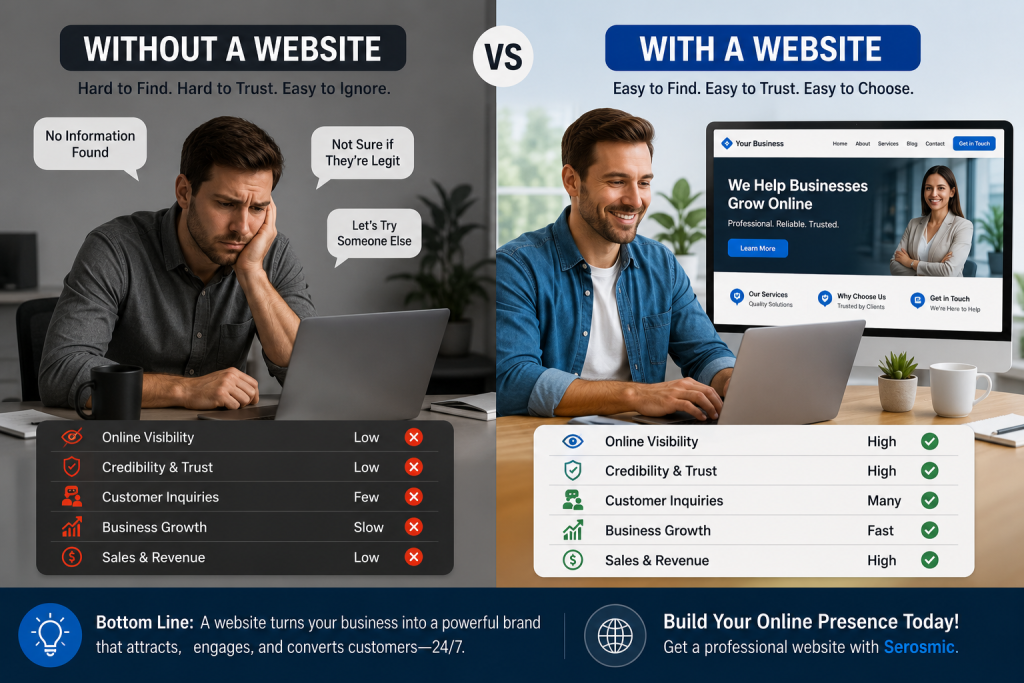
If your business doesn’t have a website, potential customers may question your credibility or choose a competitor with a stronger online presence.
A professional website reassures visitors that your business is legitimate, accessible, and ready to serve them.
2. A Website Builds Trust and Credibility
First impressions matter.
When someone visits a clean, fast, and well-designed website, they immediately develop more confidence in your business.
Your website allows you to showcase:
- Customer testimonials
- Awards and certifications
- Business experience
- Portfolio
- Team members
- Client success stories
These elements help build trust before a customer even contacts you.
For small businesses especially, a professional website can level the playing field and create the impression of an established, reliable brand.
3. Your Business Is Open 24/7
Unlike a physical store, a website never closes.
Customers can:
- Browse your services
- Read blog articles
- Send inquiries
- Book appointments
- Purchase products
…at any time of the day, regardless of your business hours.
This constant availability increases convenience and creates more opportunities for sales and lead generation.
4. Reach More Customers
- A physical store is limited by location.
- A website removes those boundaries.
People from different cities—or even different countries—can discover your business through search engines, social media, or online recommendations.
Combined with SEO and digital marketing, a website becomes a powerful tool for attracting new customers organically.
5. A Website Supports All Your Marketing Efforts
Whether you’re running Google Ads, posting on Instagram, sending email campaigns, or creating YouTube videos, all your marketing activities should lead people to one place—your website.
Your website acts as the central hub of your online presence, where visitors can:
- Learn about your business
- Explore your services
- Read valuable content
- Contact you
- Make purchasing decisions
Without a website, many marketing opportunities are lost because potential customers have nowhere reliable to learn more about your business.
6. Improve Customer Experience
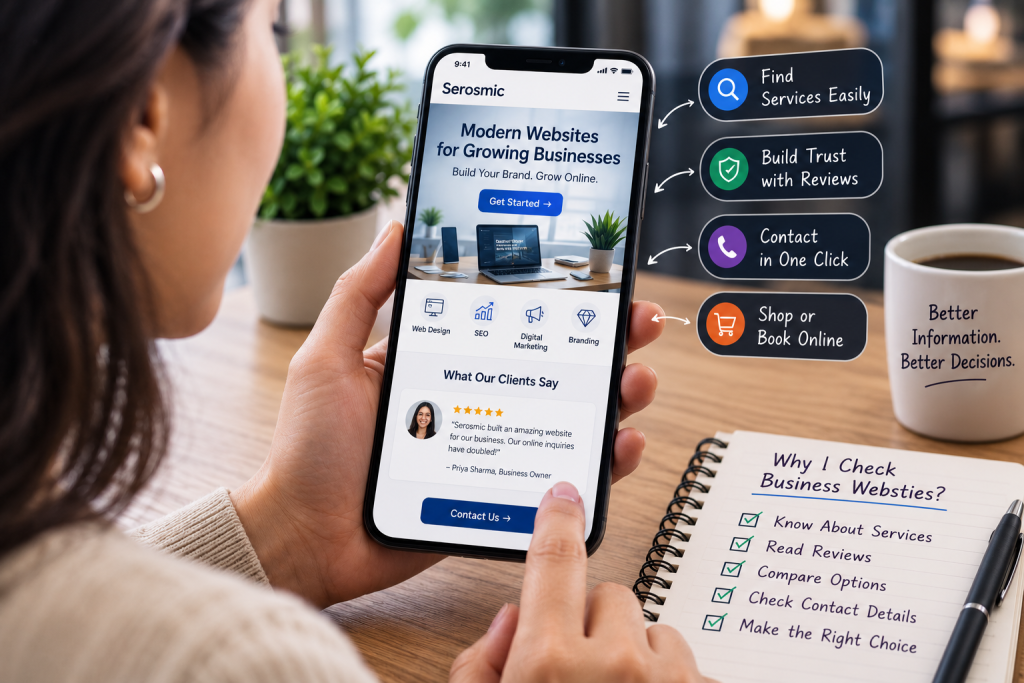
A well-designed website makes it easier for customers to interact with your business.
Instead of calling during business hours or visiting your physical location, customers can quickly find the information they need online.
A professional website allows visitors to:
- View products and services
- Read FAQs
- Check business hours
- Find contact information
- Request quotes
- Book appointments
- Read customer reviews
The easier it is for customers to find answers, the more likely they are to trust your business and take the next step.
7. Increase Visibility with Search Engine Optimization (SEO)
One of the biggest advantages of having a website is the opportunity to appear in search engine results.
When people search for products or services related to your business, a well-optimized website can help you appear on search engines like Google.
SEO helps your business:
- Attract organic traffic
- Reach people actively searching for your services
- Build long-term online visibility
- Generate leads without relying only on paid advertisements
Unlike social media posts that disappear from users’ feeds, well-written website content can continue attracting visitors for months or even years.
8. A Cost-Effective Marketing Tool
Traditional advertising methods such as newspapers, magazines, radio, and billboards often require a significant investment.
A website, however, works as a long-term marketing asset.
Once your website is live, it can support multiple marketing strategies, including:
- Blog content
- SEO
- Social media campaigns
- Email marketing
- Google Ads
- Content marketing
Instead of constantly paying for short-term exposure, your website continues promoting your business every day.
9. Stay Ahead of Your Competitors
Your competitors are already building their online presence.
If customers can easily find information about competing businesses but struggle to find yours, you may lose valuable opportunities.
A modern website gives your business a competitive advantage by showcasing your expertise, highlighting your unique strengths, and making it easy for customers to choose you over others.
Even small businesses can compete successfully when they combine a professional website with quality content and effective digital marketing.
10. A Website Grows with Your Business
As your business expands, your website can grow with it.
You can add:
- New services
- Online booking systems
- E-commerce functionality
- Customer support
- Live chat
- Blogs and resources
- Career opportunities
- Client portals
Unlike printed brochures or advertisements, a website can be updated anytime to reflect your latest products, services, and achievements.

Common Mistakes Businesses Should Avoid
Many businesses create a website but fail to get the results they expect.
- Here are some common mistakes to avoid:
- Ignoring Mobile Users
- Most people browse the internet using smartphones.
- A website that isn’t mobile-friendly may frustrate visitors and reduce conversions.
- Slow Loading Speed
- Visitors expect websites to load quickly.
- Even a few extra seconds of loading time can increase bounce rates and cause potential customers to leave.
- Outdated Information
- Incorrect contact details, old pricing, or outdated services create confusion and reduce trust.
- Keep your website updated regularly.
- No Clear Call to Action
- Every page should encourage visitors to take the next step, whether it’s contacting your business, requesting a quote, booking a consultation, or making a purchase.
Frequently Asked Questions
- Is social media enough for a business?
- Social media is an excellent marketing channel, but it shouldn’t replace a website. A website gives you complete ownership of your online presence and serves as the central destination for your customers.
- Do small businesses really need a website?
- Absolutely. Even local businesses benefit from having a professional website because customers often search online before making purchasing decisions.
- How much does a business website cost?
- The cost depends on your business goals, required features, design complexity, and functionality. A professional website should be viewed as a long-term investment rather than an expense.
- Can a website help increase sales?
- Yes. A well-designed website builds trust, attracts qualified visitors, generates leads, and makes it easier for customers to purchase products or contact your business.
Final Thoughts
A website is no longer a luxury—it’s an essential part of running a successful business in today’s digital world.
Whether you’re a freelancer, startup, local business, or established company, your website serves as your digital headquarters. It helps customers discover your business, learn about your services, build trust in your brand, and connect with you anytime, from anywhere.
While social media platforms and online marketplaces are valuable marketing channels, they should support your website—not replace it. Your website is the one platform you truly own, giving you complete control over your brand, customer experience, and future growth.
Investing in a professional website today is an investment in your business’s long-term success. As technology continues to evolve and more customers search online before making decisions, having a strong digital presence will become even more important.
No matter the size of your business, the right website can help you attract more customers, strengthen your brand, and create new opportunities for growth.