
Introduction
The way businesses connect with customers has changed dramatically over the last decade. Gone are the days when newspapers, television commercials, radio ads, and billboards were the only ways to promote a product or service. Today, millions of people spend hours every day online—searching for information, watching videos, shopping, scrolling through social media, and reading reviews before making decisions.
This shift has made digital marketing one of the most powerful tools for businesses of every size. Whether you’re a startup, a local shop, a freelancer, or a global brand, having an online presence is no longer optional—it’s essential.
But what exactly is digital marketing?
Simply put, digital marketing is the practice of promoting products, services, or brands using digital channels such as search engines, websites, social media platforms, email, and mobile applications. Unlike traditional marketing, digital marketing allows businesses to reach the right audience, measure performance in real time, and improve campaigns based on data.
One of the biggest advantages of digital marketing is accessibility. You don’t need a huge budget to get started. With the right strategy, even a small business can compete with larger brands and build a loyal customer base online.
In this beginner’s guide, you’ll learn what digital marketing is, why it matters, its major types, and how you can start using it to grow a business or build a successful career.
What Is Digital Marketing?
Digital marketing refers to all marketing activities that use the internet or electronic devices to connect businesses with potential customers.
Instead of relying only on printed advertisements or television commercials, businesses now use online platforms to attract visitors, generate leads, and increase sales.
Common digital marketing channels include:
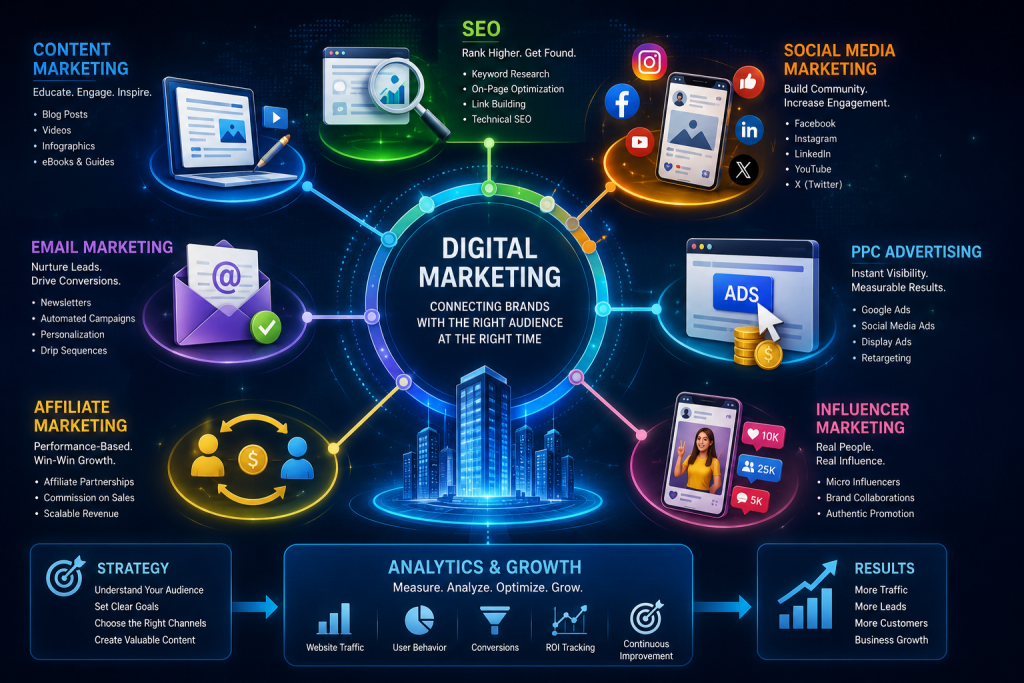
- Search Engines (Google, Bing)
- Social Media Platforms
- Business Websites
- Email Marketing
- Mobile Applications
- Video Platforms
- Online Advertising
The main goal is not just to reach more people—but to reach the right people with the right message at the right time.
Why Is Digital Marketing Important?
Consumer behavior has changed significantly in recent years.
Before buying a product or choosing a service, people often:
- Search online for information
- Compare prices
- Read customer reviews
- Visit company websites
- Watch videos
- Check social media pages
If your business isn’t visible online, you’re likely missing valuable opportunities.
Digital marketing helps businesses:
- Increase brand awareness
- Reach targeted audiences
- Build customer trust
- Generate qualified leads
- Improve sales
- Measure campaign performance accurately
- For startups and small businesses, it also offers a cost-effective way to compete with larger companies.
Traditional Marketing vs Digital Marketing
Although both aim to promote products and services, they work very differently.
Traditional Marketing
Examples include:
- Newspapers
- Magazines
- Television
- Radio
- Billboards
- Flyers
Advantages:
- Broad local reach
- Good for offline branding
Limitations:
- Expensive
- Difficult to measure results
- Limited audience targeting
Digital Marketing
Examples include:
- Google Search
- YouTube
- Email Campaigns
Advantages:
- Lower cost
- Global reach
- Precise targeting
- Real-time analytics
- Better return on investment
This flexibility is one of the biggest reasons businesses are investing more in digital marketing every year.
Types of Digital Marketing
Digital marketing includes several specialized areas. Each plays a unique role in helping businesses grow online.
1. Search Engine Optimization (SEO)
SEO is the process of improving a website so it appears higher in search engine results.
The higher your website ranks, the more visitors it can attract without paying for ads.
Good SEO focuses on:
- High-quality content
- Relevant keywords
- Fast website speed
- Mobile-friendly design
- User experience
2. Content Marketing
Content marketing involves creating valuable information that educates, entertains, or solves problems for your audience.
Examples include:
- Blog posts
- Videos
- Infographics
- Case studies
- E-books
- Guides
Quality content builds trust and encourages long-term customer relationships.
3. Social Media Marketing
Social media platforms allow businesses to interact directly with their audience.
Popular platforms include:
- X (formerly Twitter)
- YouTube
Businesses use these platforms to increase visibility, engage customers, and promote products or services.
4. Email Marketing
Despite the rise of social media, email marketing remains one of the most effective digital marketing strategies. It allows businesses to communicate directly with customers, build long-term relationships, and encourage repeat purchases.
Businesses commonly use email marketing to:
- Share newsletters
- Announce new products or services
- Offer exclusive discounts
- Send personalized recommendations
- Re-engage inactive customers
A well-planned email campaign can generate excellent results while maintaining a personal connection with the audience.
5. Pay-Per-Click (PPC) Advertising
PPC is a paid advertising model where businesses pay only when someone clicks on their advertisement.
These ads appear on:
- Search engines
- Social media platforms
- Websites
- Video platforms
One of the biggest advantages of PPC is speed. Unlike SEO, which may take time to show results, paid advertising can generate traffic almost immediately.
However, successful PPC campaigns require proper audience targeting, compelling ad copy, and continuous optimization to maximize return on investment.
6. Affiliate Marketing
Affiliate marketing is a performance-based strategy where individuals or businesses promote another company’s products or services in exchange for a commission.
Whenever someone purchases through an affiliate’s unique referral link, the affiliate earns a percentage of the sale.
This model benefits both businesses and content creators because companies increase sales while affiliates earn income by recommending products they trust.
7. Influencer Marketing
Influencer marketing has become one of the fastest-growing forms of digital marketing.
Businesses collaborate with creators who have built loyal audiences on platforms like Instagram, YouTube, TikTok, or LinkedIn.
Instead of relying solely on traditional advertisements, brands use influencers to create authentic recommendations that feel more personal and trustworthy.
For many businesses, influencer partnerships help increase brand awareness, engagement, and customer confidence.

Benefits of Digital Marketing
Digital marketing offers advantages that traditional marketing often cannot match.
- Global Reach
A small business can promote its products or services to customers around the world through a website or social media platforms.
- Cost-Effective Marketing
Compared to television commercials or newspaper advertisements, many digital marketing strategies require a significantly smaller budget while delivering measurable results.
- Better Audience Targeting
Businesses can target customers based on factors such as:
- Age
- Location
- Interests
- Online behavior
- Purchase history
This precision helps improve campaign performance and reduce unnecessary advertising costs.
- Real-Time Performance Tracking
One of the biggest strengths of digital marketing is the ability to measure results instantly.
- Businesses can monitor:
- Website visitors
- Click-through rates
- Conversion rates
- Engagement levels
- Sales performance
These insights make it easier to improve future campaigns.
Stronger Customer Relationships
Through blogs, emails, and social media, businesses can communicate regularly with their audience, answer questions, and build lasting trust.

How Beginners Can Start Learning Digital Marketing?
Starting your digital marketing journey doesn’t have to be complicated.
Learn the Basics
Understand the core concepts of SEO, content marketing, social media marketing, email marketing, and online advertising.
Build Your Own Website
Creating a personal website or blog is one of the best ways to gain practical experience.
You can experiment with content, SEO, and website optimization while building your online portfolio.
Practice Consistently
Knowledge becomes valuable only when you apply it.
Write blog posts, manage social media pages, analyze website traffic, and test different marketing strategies to improve your skills.
Stay Updated
Digital marketing evolves rapidly.
Following industry blogs, attending webinars, and learning about new technologies will help you stay ahead of changing trends and consumer behavior.
Common Mistakes Beginners Should Avoid
Many beginners make avoidable mistakes that slow their progress.
Expecting Instant Results
Successful digital marketing requires consistency and patience. SEO, content marketing, and brand building often take time before delivering significant results.
Ignoring Content Quality
Publishing large amounts of low-quality content rarely works.
Focus on creating valuable, informative, and engaging content that genuinely helps your audience.
Neglecting Mobile Users
Most internet users browse websites using smartphones.
A website that isn’t mobile-friendly may lose visitors and potential customers.
Not Measuring Performance
Without analyzing results, it’s impossible to know what’s working.
Regularly reviewing website analytics and campaign performance helps improve future marketing efforts.

Frequently Asked Questions
- Is digital marketing a good career?
- Yes. Digital marketing is one of the fastest-growing career fields, offering opportunities in SEO, social media management, content writing, paid advertising, email marketing, analytics, and more.
- Do I need coding knowledge?
- No. Basic digital marketing can be learned without programming skills, although understanding websites can be an added advantage.
- How long does it take to learn digital marketing?
- Most beginners can understand the fundamentals within a few months through consistent learning and practical experience. Mastery comes with continuous practice.
- Is digital marketing only for large businesses?
- Not at all. Small businesses, startups, freelancers, and entrepreneurs often benefit the most because digital marketing allows them to compete with larger brands on a limited budget.
Final Thoughts
Digital marketing has transformed the way businesses connect with customers. It offers powerful opportunities to reach targeted audiences, build meaningful relationships, and grow sustainably in an increasingly digital world.
Whether you’re a student exploring career options, an entrepreneur launching a startup, or a business owner looking to expand online, learning digital marketing is one of the smartest investments you can make.
The key to success isn’t using every marketing strategy at once. Instead, focus on understanding your audience, creating valuable content, measuring results, and improving consistently over time.
Remember, every successful online brand started with a single step. The sooner you begin learning and applying digital marketing, the sooner you’ll start building a strong digital presence.