- Artificial Intelligence has transformed the way people work, learn, and create. From writing articles and designing graphics to generating music and editing videos, AI-powered tools are becoming an essential part of everyday life. What once seemed like science fiction is now helping businesses, students, artists, and professionals complete tasks in minutes.
This rapid growth has also sparked an important question:
Can AI truly replace human creativity?
Some believe AI is the future of creative work because it can generate ideas quickly and handle repetitive tasks with remarkable efficiency. Others argue that creativity is deeply connected to human emotions, experiences, and imagination—qualities that machines simply cannot possess.
The reality is more nuanced. AI is an incredibly powerful tool, but creativity is about more than producing content. It involves curiosity, empathy, storytelling, intuition, and the ability to connect with people on an emotional level.
In this article, we’ll explore the differences between AI and human creativity, examine their strengths and limitations, and understand how they can work together to shape the future of innovation.
What Is Artificial Intelligence?
Artificial Intelligence (AI) refers to computer systems that can perform tasks typically associated with human intelligence. These tasks include learning from data, recognizing patterns, generating text and images, solving problems, and making predictions.
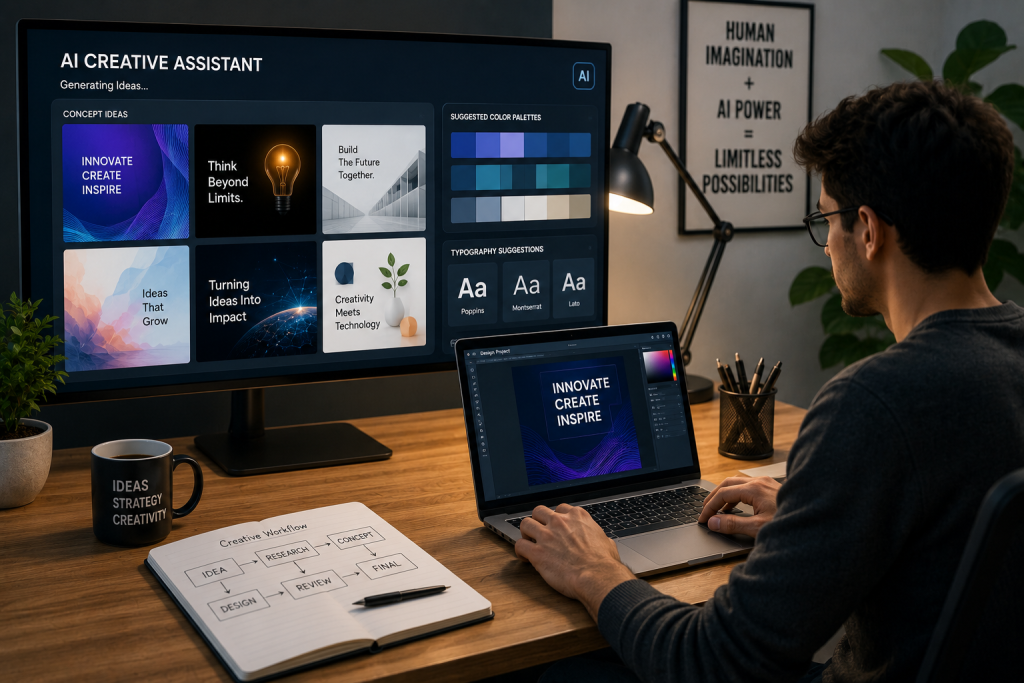
Today’s AI tools can help with:
- Writing blog posts and emails
- Designing graphics
- Creating presentations
- Editing videos
- Translating languages
- Analyzing large datasets
- Automating repetitive business tasks
Rather than thinking like humans, AI identifies patterns from the information it has been trained on and generates responses based on those patterns.
What Is Human Creativity?
Human creativity is the ability to imagine, invent, and express original ideas influenced by emotions, experiences, culture, and personal perspective.
Creativity isn’t limited to art or music. It appears in:
- Solving everyday problems
- Starting a business
- Writing stories
- Designing products
- Developing marketing campaigns
- Building meaningful relationships
Unlike AI, humans create not only from knowledge but also from memories, feelings, intuition, and lived experiences.
AI vs Human Creativity: Understanding the Difference
Although AI can produce impressive results, the process behind those results is fundamentally different from human creativity.
- AI Creates Through Patterns
AI analyzes enormous amounts of existing data and identifies relationships between words, images, sounds, or designs. It predicts what is most likely to come next based on its training.
For example, when asked to write an article or create an image, AI combines learned patterns to generate something new.
- Humans Create Through Experience
People create by drawing from emotions, imagination, curiosity, personal stories, and unique life experiences.
A painter may express grief through colors. A songwriter may write from personal heartbreak. An entrepreneur may build a business after solving a problem they personally faced.
These emotional and personal experiences shape creativity in ways that AI cannot genuinely experience.
- Strengths of Artificial Intelligence
AI has become a valuable creative assistant because it offers several practical advantages.
1. Speed
AI can generate content, ideas, or designs within seconds, saving hours of manual effort.
2. Productivity
It helps automate repetitive tasks, allowing professionals to focus on strategy and innovation.
3. Research Assistance
AI quickly summarizes information and organizes complex data, making research more efficient.
4. Content Generation
From social media captions to blog outlines, AI can produce drafts that help overcome creative blocks.
5. Cost Efficiency
Small businesses and startups can access professional-quality tools without hiring large teams for every task.
Where Human Creativity Still Leads?
Despite AI’s impressive capabilities, there are areas where human creativity remains unmatched.
- Emotional Intelligence
People understand feelings, relationships, empathy, and emotional nuance. Great stories, memorable advertisements, and meaningful conversations often rely on these qualities.
- Original Vision
Humans often challenge existing ideas and imagine entirely new possibilities. Many groundbreaking inventions began as bold ideas that didn’t follow existing patterns.
- Ethical Judgment
Creative decisions frequently involve ethics, cultural awareness, and responsibility—areas where human judgment is essential.
- Personal Connection
People naturally connect with authentic experiences and genuine stories. That emotional connection is difficult for AI to replicate.
Can AI Replace Human Creativity?
This is one of the most debated questions in today’s digital world.
The short answer is No—not entirely.
AI can assist, enhance, and accelerate the creative process, but it cannot fully replace the human mind. Creativity is more than producing words, images, or music. It involves emotion, purpose, intuition, imagination, and the ability to understand people on a deeper level.
For example, AI can generate a logo in seconds, but understanding a company’s vision, values, target audience, and long-term identity still requires human insight. Similarly, AI can write a blog draft, but creating content that genuinely inspires, persuades, or builds trust often depends on a human writer’s experience and perspective.
Instead of replacing creativity, AI is changing **how** creative work is done.
Real-World Examples of AI and Human Creativity
Across different industries, AI and humans are already working together to achieve better results.
- Digital Marketing
AI helps marketers generate content ideas, analyze customer behavior, and automate repetitive tasks.
Human marketers transform those insights into campaigns that connect emotionally with customers and strengthen brand identity.
- Graphic Design
AI can quickly create layouts, remove backgrounds, or generate image concepts.
Designers refine those ideas by adding originality, storytelling, and a visual identity that reflects the brand.
- Music
AI tools can compose melodies or suggest harmonies.
Musicians bring emotion, personal style, and artistic expression that make music meaningful.
- Writing
AI assists with research, outlines, grammar, and first drafts.
Writers shape the message, adjust the tone, and add authentic experiences that resonate with readers.
Why AI Works Best as a Creative Partner?
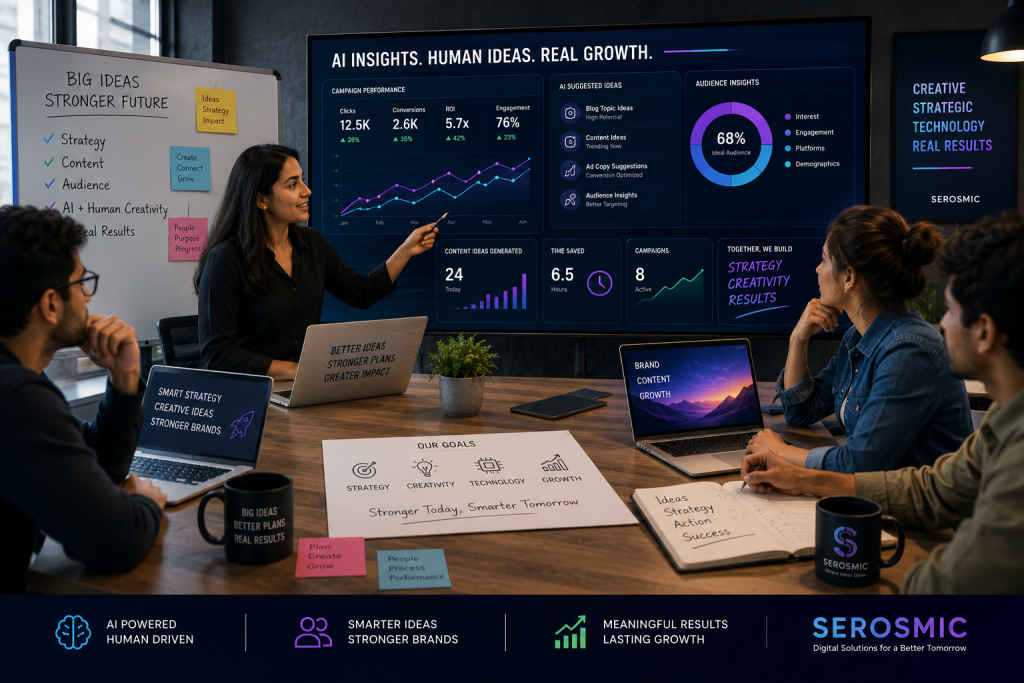
The most successful creators today don’t see AI as a competitor—they use it as a productivity tool.
By allowing AI to handle repetitive or time-consuming tasks, creators gain more time to focus on innovation, strategy, and storytelling.
A balanced workflow might look like this:
* AI generates initial ideas.
* Humans evaluate and improve them.
* AI helps with editing and formatting.
* Humans add creativity, personality, and final refinement.
This collaboration combines speed with originality.
Challenges of Using AI in Creative Work
Although AI offers many advantages, relying on it without careful review can create problems.
- Lack of Emotional Depth
AI can imitate emotional language, but it doesn’t experience joy, fear, excitement, or empathy. As a result, some AI-generated content may feel polished yet emotionally distant.
- Similarity in Content
Because AI learns from existing patterns, different users may receive content with similar structures or ideas.
Businesses and creators should always personalize AI-generated work to maintain originality.
- Accuracy Matters
AI can occasionally provide outdated or incorrect information.
For this reason, it’s important to verify facts, especially when creating educational, financial, legal, or medical content.
- Creative Dependency
Using AI for every task may reduce opportunities to develop your own creative thinking.
The best approach is to let AI support your creativity—not replace it.
- The Future of Creativity
The future isn’t about AI replacing humans.
It’s about humans learning how to use AI effectively.
Professionals who combine creativity with technology will have a significant advantage in the coming years.
Future creators will need skills such as:
* Critical thinking
* Problem-solving
* Storytelling
* Branding
* Strategic decision-making
* AI literacy
* Communication
* Emotional intelligence
These abilities will become even more valuable as AI continues to evolve.
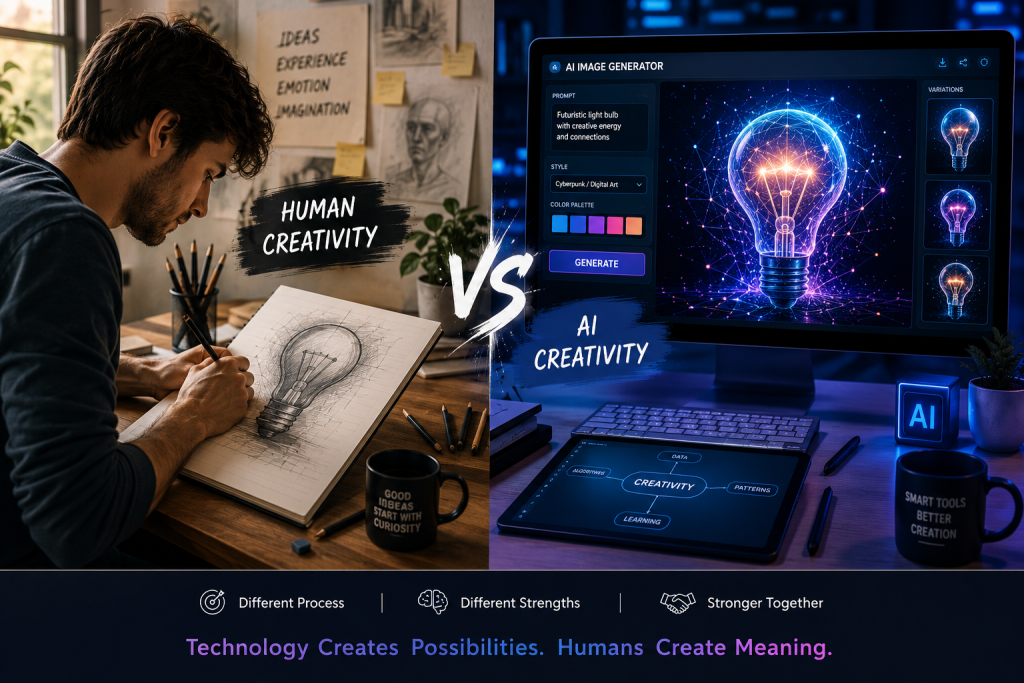
AI and Human Creativity: A Quick Comparison
Artificial Intelligence Human Creativity
Works with patterns and data Works with imagination and experience
Extremely fast Thoughtful and intentional
Excellent for automation Excellent for innovation
Doesn’t experience emotions Driven by emotions and empathy
Consistent performance Unique personal perspective
Great assistant Visionary creator
The strongest results often come when both work together.
Frequently Asked Questions
- Is AI more creative than humans?
AI is highly capable of generating ideas based on existing patterns, but human creativity remains unique because it is influenced by emotions, personal experiences, intuition, and imagination.
- Should creative professionals be worried about AI?
Rather than replacing creative professionals, AI is changing how they work. Those who learn to use AI effectively are likely to become more productive and competitive.
- Can AI create original ideas?
AI can combine information in new ways, but it doesn’t have personal experiences or genuine imagination. Truly original ideas often emerge from human curiosity, observation, and emotion.
- What is the best approach?
The most effective approach is collaboration. Let AI improve efficiency while humans provide creativity, judgment, and authenticity.
Final Thoughts
Artificial Intelligence has become one of the most powerful technologies of our time, transforming the way we create, communicate, and solve problems. However, creativity is not just about producing content—it’s about expressing ideas, understanding people, and creating meaningful experiences.
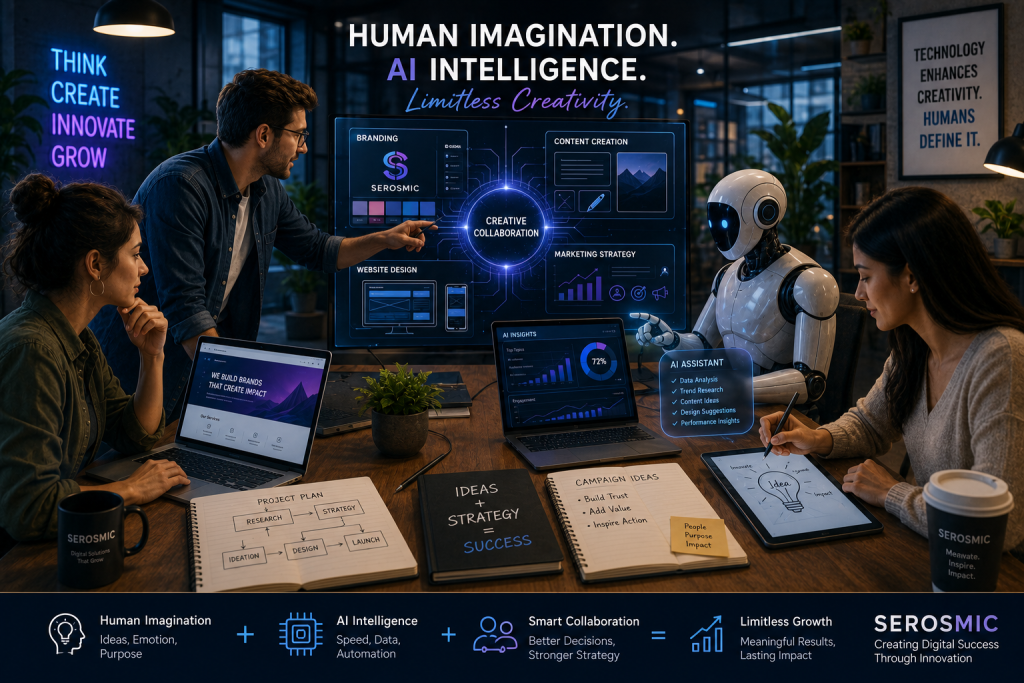
AI can generate text, images, and designs in seconds, but it cannot replace the emotions, intuition, and originality that define human creativity.
The future doesn’t belong to AI alone or humans alone. It belongs to those who understand how to combine technology with imagination.
Businesses, students, marketers, designers, writers, and entrepreneurs who embrace AI while continuing to develop their own creative skills will be better prepared for the opportunities of tomorrow.
Technology may change the creative process, but human imagination will always remain at its heart.